Tell us your jobsite challenge — we will pair crawler excavators, mini excavators, and wheel loaders with Tier 4 Final options, ISO 4406 hydraulic cleanliness targets, and regional parts support across 68 countries.
Straight answers contractors ask before locking a purchase order on excavators and loaders.
Typical 30-ton class crawler excavators ship in 12–14 weeks ex-works, plus a 7-day on-site commissioning audit covering boom pin gauges, hydraulic cleanliness sampling, and operator familiarization. Mini excavators often move faster when regional stock exists.
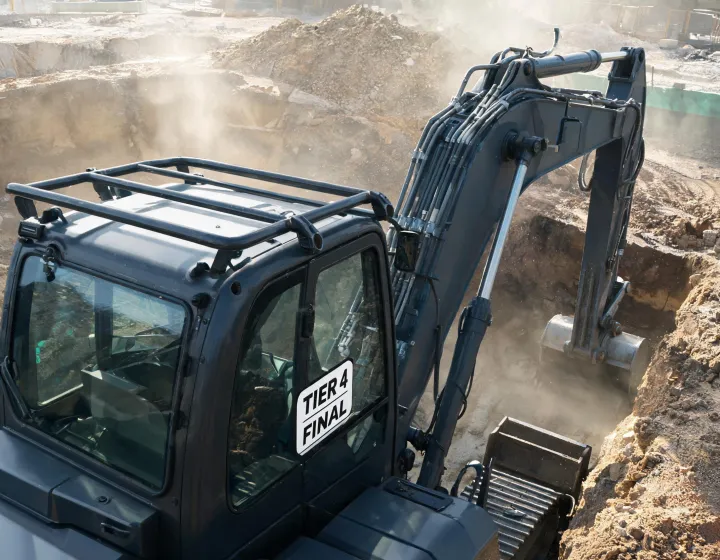
Yes. Current crawler, wheel, and forklift lines offered for regulated markets ship with Tier 4 Final / Stage V aftertreatment packages. We issue NOx and particulate documentation per machine serial when your bid package requires it.
Rebuild packages for track shoes, idlers, sprockets, and rollers typically land around 18–22% of new-machine list when wear surveys support reuse of frames. Quotes are machine-specific after a field wear survey, not a flat catalog guess.
On contracted sites we target under 18 hours mean-time-to-repair through regional parts hubs. Share GPS coordinates and machine serial when you call the hotline so the van rolls with the right hydraulic seal kits and track hardware.
Application engineers coordinate pin-gauge inspection, anti-two-block checks where applicable, and load-chart documentation packs. Deliverables typically return within five working days of the on-site audit for planning offices that need stamped records.
Hydraulic systems are prepared toward ISO 4406 18/16/13 cleanliness targets with documented filter change intervals. Commissioning includes a sample check so your maintenance team starts from a known baseline.
Friendly advisors walk you through working range, undercarriage shoe width, and cab comfort before you commit budget — not after the machine lands on the pad.
Use this comparison when your estimator is choosing between urban utility digs and higher-volume mass excavation.
| Parameter | Model 200LC class | Model 300LC class |
|---|---|---|
| Operating mass | 20.5 t | 30.4 t |
| Bucket | 0.9 m³ | 1.4 m³ |
| Boom reach | 6.1 m | 6.7 m |
| Engine | 130 kW Tier 4 Final | 200 kW Tier 4 Final |
| Track shoe | 600 mm | 600–700 mm options |
| Digging depth (ref.) | 6.5 m | 7.2 m |
| Hydraulic system pressure (ref.) | 320 bar / 32 MPa | 350 bar / 35 MPa |
| Cab package | ROPS + FOPS | ROPS + FOPS + enhanced monitoring |
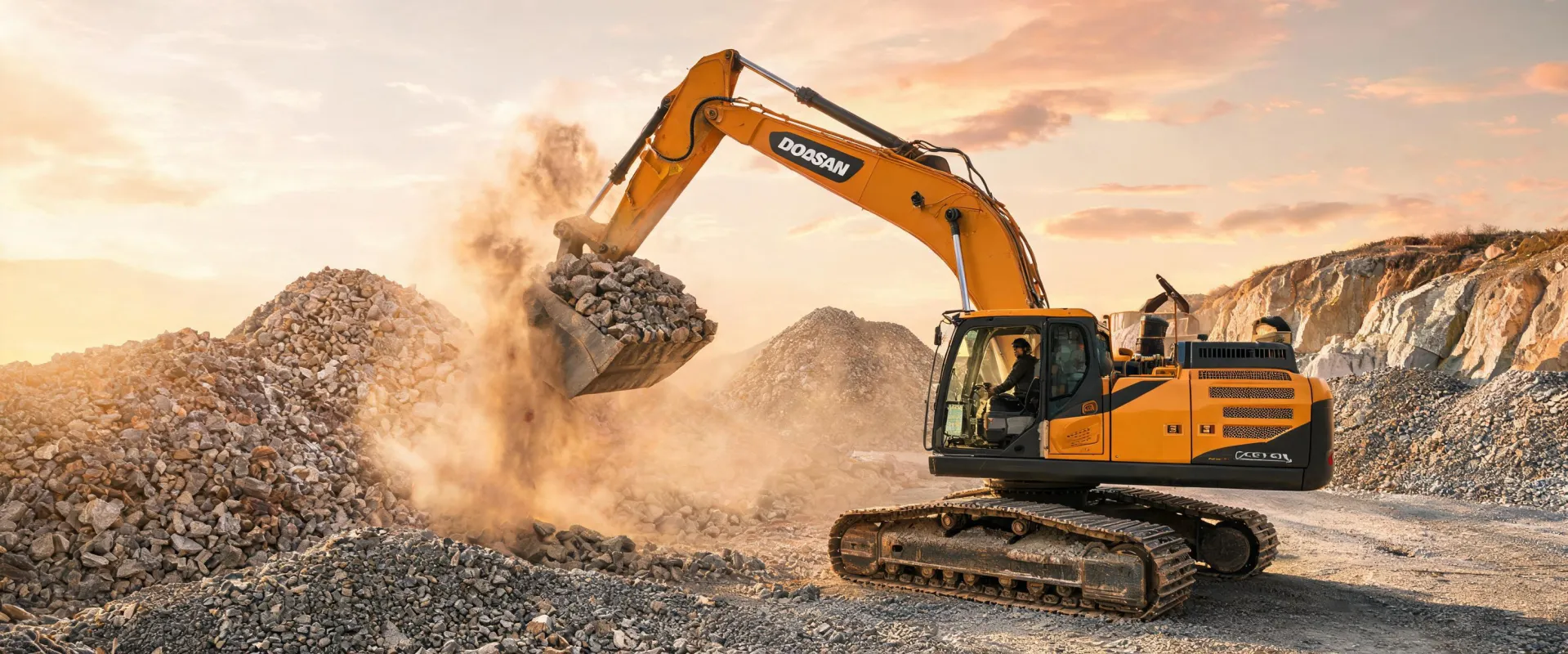
| Typical worksite fit | Utility, site prep, urban digs | Quarry loading, highway cuts, foundations |
“We kept a rainy-season foundation window because the Doosan excavator cycle times and undercarriage wear stayed predictable. Their application engineer stayed on the radio when clay turned sticky — that felt like a partner, not a catalog.”
Share company, country, equipment class, and fleet size. An application engineer replies with machine class options, attachment notes, and a commissioning outline — usually within two working days.
Whether you are filling a single mini excavator gap or staging a multi-machine road cut, we keep the conversation practical: dig depth, soil type, shift length, and spare-parts reality.